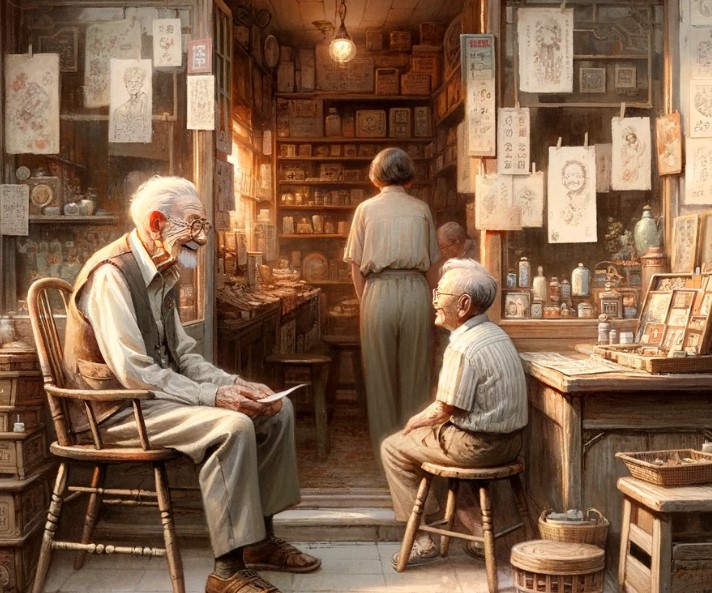
In the corner of a damaged shopping complex stood a small shop, managed by my elderly grandfather, a veteran with a young heart despite his old age. He was quick to criticize anyone who didn’t follow his methods, a trait that strained his relationship with his middle-aged children. Feeling the need to reconnect, he decided to buy a shop in the dilapidated complex, hoping to make a meaningful contribution to the world and mend the gap between him and his family.
The shop needed extensive work, from procuring new goods to significant maintenance. This effort took a toll on Grandfather’s health, yet he pressed on alone, as his children, feeling resentful and helpless, did not offer their support. After much labor, he finally opened his small shop of antiques. He sat by the entrance, waiting with hope, but days passed without a single customer, and his once fiery spirit grew pale with each passing day.
As his grandchild, I couldn’t ignore the change. I saw my once grumpy grandfather grow silent, no longer arguing or correcting. Unsure of how to help, I followed him to the shop one day and witnessed him sitting quietly by the entrance, eyes scanning the empty walkway. I thought of knocking on every door to invite people, but that would mean Grandfather had to accompany me, and he never accepted help from anyone.
It was an old village where everyone knew each other, but the aging generation often stayed confined to their homes. I realized that more than customers, Grandfather needed conversation and community. With a spark of inspiration, I announced that I wanted a birthday party at our family house. My parents, knowing it was the first time I asked for anything, nodded yes. They allowed me to invite the neighbors, unaware of my true plan.
I made small posters about the antique shop, drawing fifty of them with my small hands and adding the shop’s address. As I visited the neighbors, I slipped these posters to the old folks, hoping they would turn up at the shop. I added a small catch: whoever visited the shop for ten days would get an antique to gift their kids or grandkids. Unbeknownst to my shopkeeper grandfather, I had made this offer.
Slowly, people began to turn up. Grandfather started noticing customers who never really bought anything but came to talk. They reminisced about old times, shared stories, and laughed together. During this time, Grandfather knew about my offer, but he didn’t question me or challenge the customers. He simply enjoyed the shared stories and laughter.
After a while, the shop stopped making much business, but Grandfather was happy that he now had company and companionship among his kind. Seeing their father happily making jokes and enjoying the newfound community, his children started chiming in to support the small business. They helped with the shop, bringing in new antiques and managing the day-to-day operations.
Just as Grandfather had hoped, he started to matter again. The shop became more than a business; it turned into a community hub where the elderly found companionship and joy. Grandfather’s spirit was rekindled, and his once strained relationship with his children began to mend.
Soul Quest: Adventures in Self-Exploration